

Ever imagined walking like a Roman, seeing the same views they did? Join us on an Arles Roman history tour. We’ll explore Arles’ ancient Roman sites in Provence. This city was once a key Roman outpost, shaping history far and wide.
Walking through Arles’ streets, we’ll find stories in every stone. We’ll see grand amphitheatres and ancient temples. Our guided tour mixes past and present, revealing Arles’ Roman heritage.
Key Takeaways
- Arles is a key city for understanding Roman history in Provence.
- The Roman ruins in Arles are remarkably well-preserved.
- A guided walking tour offers insights that enrich our understanding of the past.
- We will explore significant archaeological landmarks that tell the story of Roman life.
- Witness architectural features that have stood the test of time.
Introduction to Arles and Its Rich History
Arles is a doorway to the ancient Roman world. It was founded in 46 BC as a Roman colony. The city became a key center for culture, trade, and commerce during the Roman Empire’s peak.
Our Provence history tour lets us see how Arles evolved. Ancient ruins here tell the story of a lively past.
Walking through the streets, we find amazing roman ruins in arles. These ruins show the skill of ancient architects. The amphitheatre and theatre are well-preserved, giving us a peek into ancient life.
Every stone we touch carries the whispers of history. It shows how Arles was a hub of trade and culture.
The mix of Roman and Provençal influences makes Arles’ history even more interesting. Its growth into a trade center shows its strategic importance. Our arles historical sightseeing tour celebrates this rich heritage.
Why Choose a Guided Walking Tour?
Choosing an Arles guided roman history tour brings many benefits. An expert guide shares deep knowledge and stories that make history come alive. This turns our visit into a memorable journey.
Guided tours offer a personal touch. We walk through the city, seeing its ancient beauty up close. This hands-on experience helps us understand the importance of each site we see.
Guided tours also reveal hidden stories of Arles’ past. We learn about the city’s social and cultural life during the Roman era. This mix of expert knowledge and hands-on exploration makes guided tours the best way to explore Arles.
Arles Roman History Tour: Step Back in Time in Provence
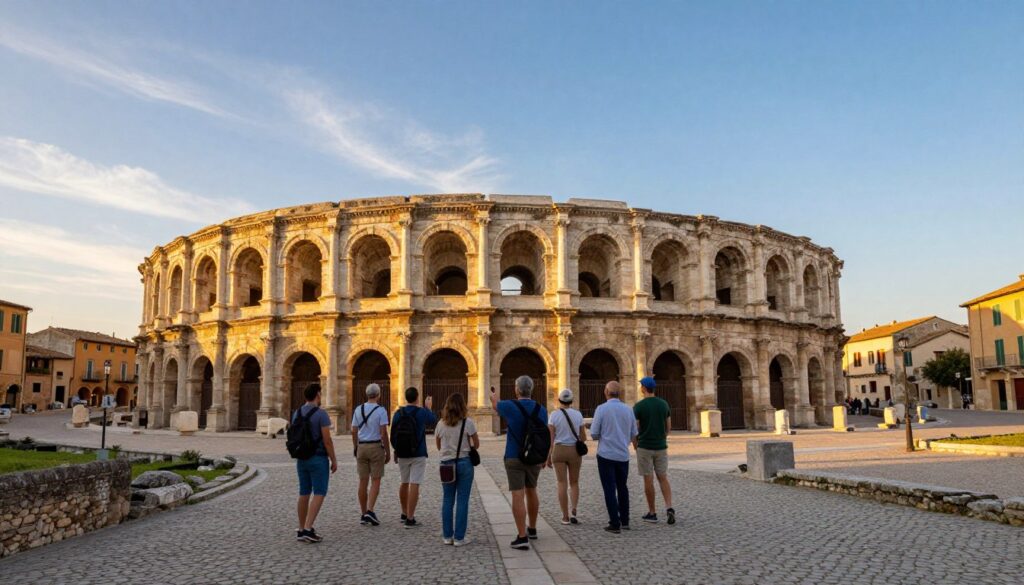
Join us on an immersive journey through time with our Arles Roman History Tour. This unique experience showcases the rich heritage of Provence. We explore the remnants of the glorious Roman Empire. Every step tells a tale of history, from modern Arles to ancient ruins.
Overview of the Tour
The tour lasts three hours, giving us time to explore Arles’ significant sites. We walk at a comfortable pace, with breaks to soak in the sights. We visit landmarks like the Amphitheatre and Roman Theatre, key to ancient Arles’ culture.
What to Expect During the Walk
Our guide will share fascinating stories, making history come alive. We encourage questions as we explore. The tour is great for photography, capturing memories of ancient structures. Our goal is to connect you with the ancient world.
Key Roman Ruins in Arles
Arles is a treasure trove of Roman history, showcasing some of the most significant *key Roman ruins in Arles*. The Amphitheatre is a standout, showing the Romans’ architectural skill. Built in the 1st century AD, it hosted gladiatorial games and public spectacles, drawing large crowds.
The Roman Theatre is another key site, giving us a glimpse into ancient Arles’ cultural life. Built around the same time as the Amphitheatre, it hosted theatrical performances, plays, and music. Its stage and seating areas still show the lively atmosphere of the past.
The Baths of Constantin offer a peek into Roman bath culture and social life. These extensive thermal baths were not just for relaxation but also for socialising. Visitors can explore the ruins, showing the high standard of living and importance of hygiene in Roman society.
In our exploration of ancient Roman sites in Provence, these ruins show the Romans’ skill in combining function and art. Each site has its own story and significance, helping us understand Arles’ rich history.
Exploring the Amphitheatre of Arles
The Amphitheatre of Arles is a marvel of Roman architecture. It’s one of the biggest landmarks in Arles. It was key to the community’s social and cultural life.
Its history and design show the lasting impact of Roman culture in Provence.
Historical Significance
In its heyday, the Amphitheatre hosted gladiatorial games and public events. These gatherings were more than just fun; they united the community. They helped create a sense of local pride.
The amphitheatre was a hub, drawing in both locals and tourists. Its lasting presence shows its importance in Roman culture.
Architectural Features
The Amphitheatre’s design is truly impressive, showcasing Roman engineering skills. It could hold about 20,000 people, with tiers for the best views. The construction shows a deep understanding of materials and space.
Today, visitors can see the layout and details that still amaze. It’s a key part of exploring Roman history in Provence.
The Ancient Roman Theatre of Arles
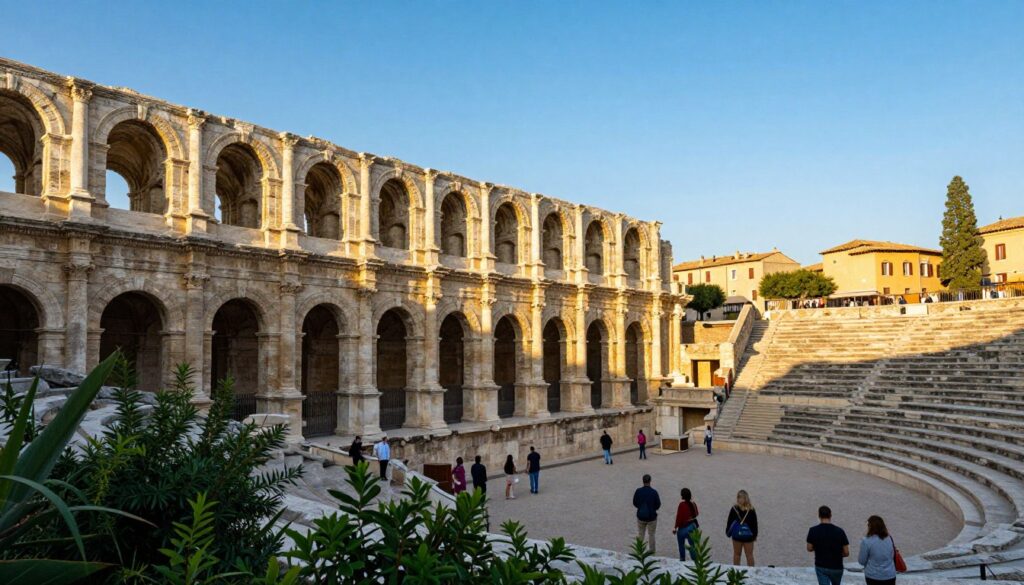
The Ancient Roman Theatre of Arles is a marvel from the first century AD. It shows off the ancient Romans’ skill in building. We can see its beauty and learn about the past through arles historical sightseeing.
This theatre was once a place for plays and music. It was filled with life, showing the Romans’ love for entertainment. It’s a glimpse into Ancient Rome’s lively culture.
The theatre’s design is typical of Roman architecture. It had seats for about 10,000 people. Walking through, we see the fine details that have lasted for centuries.
The Romans knew how to make sounds travel far. This helped performers reach every corner of the theatre. It shows their clever use of space and sound.
Today, the theatre hosts festivals and concerts. It’s a bridge between ancient and modern times. This makes it a key ancient roman site in provence.
Its ongoing use shows the Romans’ lasting impact. Visiting this site lets us explore Arles’ cultural history. It highlights Provence’s love for the arts.
Discovering the Baths of Constantin
The Baths of Constantin show us the luxury of ancient Rome’s bathing culture. These roman ruins in Arles give us a peek into life back then. On our arles guided roman history tour, we explore how these baths were important in Roman society.
Understanding Roman Bath Culture
Bathing in ancient Rome was more than just cleaning up. It was a social event where people came together. The Baths of Constantin had different rooms for different needs, making bathing a special experience. Key areas included:
- Caldarium: The hot bath facility, designed to cleanse and relax bathers with steam.
- Frigidarium: A cold bath area that invigorated visitors after the warmth of the caldarium.
- Palaestra: An exercise yard where patrons would engage in physical activities before bathing.
Every part of the baths was important for Roman social life. They were key to the lively atmosphere in Arles during the Roman Empire. Walking through, we can picture the lively talks and exchanges that once happened here.
Other Notable Roman Sites in Provence
Exploring Provence, we find many ancient roman sites that show the Roman Empire’s greatness. A tour of the Roman Empire in Provence lets us see these treasures up close. We learn more about them than just the charm of Arles.
The Pont du Gard aqueduct is a must-see. It carried water to Nîmes in ancient times. Its tall, curved sections show Roman engineering skills. Seeing it, we understand how the Romans built and worked with their environment.
Glanum, near Saint-Rémy-de-Provence, is another gem. It was a thriving town under Roman rule. The ruins tell us about the lives of those who lived there, including their temples and baths. Visiting Glanum gives us a peek into Roman culture and society.
| Roman Site | Location | Significance |
|---|---|---|
| Pont du Gard | Nîmes | Engineering marvel known for its aqueduct system |
| Glanum | Saint-Rémy-de-Provence | Preserved ruins showcasing ancient Roman urban life |
These sites in Provence help us understand the Roman Empire’s impact. Each place on our tour adds to our knowledge of Provence’s rich history. We see the lasting legacy of these ancient civilizations.
Arles' Archaeological Landmarks and Their Stories
Exploring Arles archaeological landmarks reveals a treasure trove of stories. These stories show us what life was like in Roman times. There are many hidden ruins that tell their own tales.
These ruins give us a peek into the past. They show us homes, temples, and public areas. Each one tells us about the Romans’ skills in building and their way of life.
Every new find in Arles adds to our knowledge of the past. This makes roman history exploration in provence even more exciting. It’s like uncovering a piece of history every time.
When you visit Arles, you can explore these hidden gems. Walking through ancient streets and seeing the ruins brings history to life. Each stone has a story to tell, waiting for us to discover.
Local Insights from Our Expert Guides
Our expert guides make the arles guided roman history tour unforgettable. They have lots of knowledge, thanks to their training and love for history. They tell us about Roman life in Arles and the amazing buildings.
Walking through ancient streets, our guides share interesting stories. They know Arles well, giving us a deeper look at the monuments. This makes our journey not just beautiful but also educational.
Every step reveals more about the sites that have lasted for centuries. Talking to our guides makes the tour a memorable adventure. We leave with stories that stay with us.
The Best Time to Experience Arles' Roman Past
When planning our arles historical sightseeing adventure, we should consider the best seasons for the Provence history tour. Spring and autumn offer mild weather, perfect for walking through ancient streets. Spring’s blooming landscapes and autumn’s golden leaves make for a beautiful view.
Visiting in peak summer months means bigger crowds, as many tourists come to Arles. While it’s lively, we might prefer a quieter time. Exploring in the early morning or late afternoon, when it’s cooler and the light is softer, is better.
Summer is also the time for local festivals. Joining these events lets us dive into the culture and history. So, visiting in late June or July is great for experiencing both history and local traditions.
| Season | Weather | Tourist Influx | Best For |
|---|---|---|---|
| Spring | Mild, blooming flowers | Moderate | Scenic beauty, fewer crowds |
| Summer | Hot, lively festivals | High | Cultural experiences, local festivities |
| Autumn | Crisp, colourful foliage | Moderate | Peaceful exploration |
| Winter | Cool, quiet | Low | Off-peak tranquillity |
In summary, choosing the right season greatly affects our experience of Arles’ Roman past. We should think about the weather and local events when planning our trip.
Conclusion
Reflecting on Arles, we see a journey through its Roman past is both captivating and enriching. Our guided walking tour lets us dive into the history that shaped this city. We see the grandeur of the amphitheatre and the stories at each site, giving us a glimpse of life back then.
Exploring Arles’ Roman past, we uncover historical gems and connect with a heritage that still influences the area. Every corner of Arles has a story, inviting us to travel back in time. Arles is more than a place; it’s a living history.
We invite all history lovers and curious travellers to join us. Get ready to dive into this historical landscape. Every moment in Arles will make us appreciate the past more. Let’s explore Arles’ Roman past and make unforgettable memories in Provence.
FAQ
What does the Arles Roman History Tour include?
Our tour takes you to Arles’ Roman ruins like the Amphitheatre and Roman Theatre. We’ll also visit the Baths of Constantin. You’ll hear stories about these sites and their importance in Roman history.
How long does the guided walking tour last?
The tour lasts about two to three hours. This gives us time to see key sites and hear from our expert guide. They’ll share historical insights and fun facts along the way.
Is the walking tour suitable for all ages?
Yes, it’s great for all ages. Families are welcome to join us as we explore Arles’ Roman past. Just remember to wear comfy shoes for walking.
Can we take photographs during the tour?
Absolutely! Taking photos is encouraged. We’ll stop at many points of interest. This way, you can capture memories while learning about the history of each site.
What should we wear for the tour?
Wear comfy clothes and sturdy shoes for walking. A hat and sunscreen are good ideas, especially in warm weather.
Are the tours conducted in English?
Yes, our tours are in English. This means you can fully understand the stories and insights from our guides as we explore ancient Roman sites in Provence.
How do I book a spot on the tour?
Booking is easy! Just visit our website, pick your date and time, and book online. Booking early is a good idea, especially during busy seasons in Provence.
What happens if the weather is bad on the day of the tour?
We usually go ahead with the tour, even in bad weather. But if it’s really bad, we might reschedule or find another way to keep everyone safe and comfortable.
Will we learn about the blending of Roman and Provençal cultures?
Yes! We’ll explore how Roman and Provençal cultures have mixed in Arles. This will help us understand the city’s unique history and cultural heritage.

 English
  Français
  Español